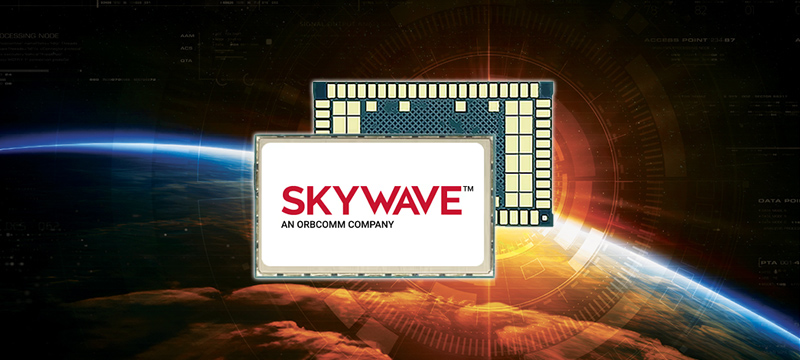
SKYWAVE, an ORBCOMM company, has launched the ST 4000 hybrid module combining satellite and cellular connectivity, positioning it as a way for industrial IoT providers to simplify coverage, design, and operations in remote and mission-critical deployments.
Hybrid satellite-cellular IoT is often sold as a coverage story, but for most OEMs and solution providers the day-to-day headache is more mundane: keeping multiple hardware variants aligned, maintaining network-specific firmware paths, and building “if-this-then-that” logic so devices behave predictably when coverage changes. Those engineering and operational costs can quietly overwhelm the value of adding satellite as a backup.
SKYWAVE is betting that the real unlock is consolidation. The company has introduced the ST 4000, a hybrid satellite-cellular IoT module aimed at mission-critical industrial applications, with an explicit promise: one module intended to span both satellite and cellular networks while also offering direct-to-device (D2D) capabilities.
In practical terms, the pitch is less about adding another way to connect and more about reducing the number of moving parts required to build “works-anywhere” IoT. SKYWAVE says the module can eliminate the need for separate device SKUs and reduce the need for custom failover logic built into applications—two areas that routinely drive cost and complexity for integrators when they try to serve customers operating across mixed geographies.
Why this announcement is different from typical “hybrid” launches
Many connectivity announcements in the satellite IoT market focus on the network layer—new coverage, new roaming, new constellation relationships. SKYWAVE’s message is notably device- and deployment-centric. Rather than positioning hybrid as something enterprises must stitch together (module choice, antenna design, connectivity contracts, application-level rules), the ST 4000 is presented as a single building block intended to absorb some of that integration burden.
That distinction matters because hybrid solutions frequently fail at the handoff points: when the application has to decide which bearer to use; when operations teams have to support two field inventories; or when product teams have to validate different variants for the same end product. Even without adding any new network claims, collapsing those handoffs into one module changes the cost curve for scaling deployments.
SKYWAVE also frames the ST 4000 around “high-value, low-data” industrial use cases. That’s a meaningful positioning choice in a market where some satellite IoT messaging is drifting toward broader bandwidth narratives. For many remote asset and infrastructure scenarios, the requirement is not throughput—it’s predictable, durable delivery of small but operationally critical messages.
Early deployment signals: environmental monitoring, asset tracking, energy infrastructure
SKYWAVE says more than a dozen solution providers have already deployed the ST 4000 in industrial applications. The company points to environmental monitoring systems needing uninterrupted data collection, remote asset tracking where cellular gaps create blind spots, and energy infrastructure management where connectivity failures can delay maintenance decisions.
While SKYWAVE does not provide performance metrics or details of those deployments, the use-case selection is telling. These are scenarios where “event integrity” matters: missing a reading, losing track of an asset during a coverage gap, or failing to transmit a maintenance-relevant status message can have outsized operational consequences. In that context, hybrid connectivity is not a nice-to-have—it becomes part of risk management.
One logical implication for solution architects is that hybrid modules can shift how you design service-level expectations. If the device can traverse urban hubs and remote operations with the same communications footprint, you can standardize workflows (alerts, escalation, reporting cadence) across the entire fleet rather than building geography-specific operating procedures.
What this means for OEMs, integrators, and connectivity providers
For OEMs, a single hybrid module can reduce product-line fragmentation. Instead of maintaining distinct cellular-only and satellite-only variants—often with different test regimes and support playbooks—teams can focus on one hardware baseline intended to cover multiple operating environments.
For system integrators, the value is in faster time-to-integration and fewer edge cases. If failover behavior is less dependent on bespoke application logic, integrators may spend less time debugging coverage-driven bugs in the field—typically the most expensive place to find them.
For connectivity providers and managed service operators, devices that abstract bearer selection can change support dynamics. Troubleshooting can move away from “which network are you on?” toward a more unified device-and-service view, particularly in fleets that cross in and out of terrestrial coverage.
Broader industry relevance: hybrid is becoming operational, not experimental
The satellite IoT sector has moved past the stage where hybrid is only for niche deployments. Enterprises increasingly expect continuity across the map, but they also expect procurement simplicity and manageable device operations. SKYWAVE’s ST 4000 is a clear example of that evolution: hybrid positioned as a packaging and lifecycle-management problem as much as a connectivity problem.
SKYWAVE is rolling the module into its SKYWAVE Connect ecosystem, which the company describes as supporting a global partner network with infrastructure for mission-critical, low-data applications. Taken together, the ST 4000 announcement underscores where hybrid IoT competition is heading: not just access to satellite and cellular, but how cleanly that combination can be productized for real-world industrial rollouts.
 ChatGPT