

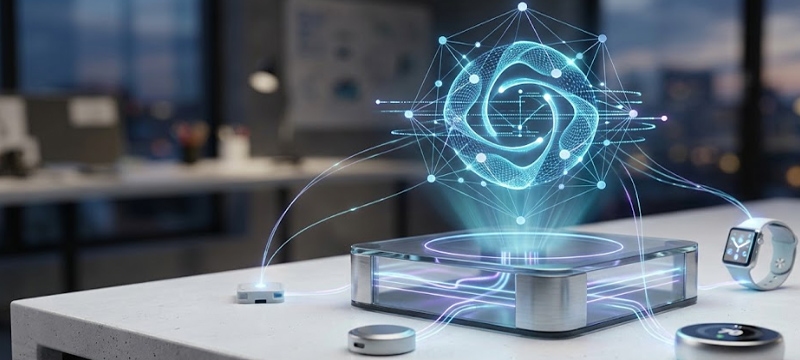
IoT startups move fast… really FAST. Products ship early. Firmware updates push overnight, and go-to-market windows close before most teams even finish their pitch decks. And somewhere between the product sprint and the funding round, branding gets left behind.
That’s a real problem in 2026, and this is where most IoT startups stumble.
AI-driven branding changes that. It brings identity creation closer to product development. It also reduces dependence on long design cycles that slow down early traction.
Why IoT Startups Struggle with Branding
Most IoT founders are engineers. Their instinct is to solve technical problems first. Branding often comes later. That gap creates friction when the product reaches the market.
Common challenges include:
- Limited design resources inside technical teams
- Fast product iterations that outpace brand updates
- Difficulty explaining complex systems in simple visual form
- High cost of external design agencies
- Inconsistent visuals across pitch decks, dashboards, and marketing pages
- Pressure to launch before identity is fully formed
These issues often lead to scattered brand presence. One product page looks different from the investor deck. App interfaces follow a different tone from social media assets. That inconsistency weakens trust.
IoT buyers often evaluate reliability before features. Visual identity plays a direct role in that first impression.
What AI Branding Actually Solves
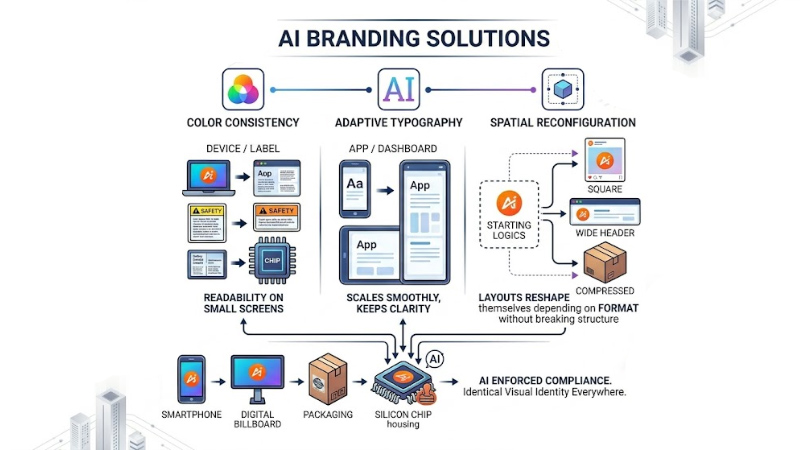
A modern AI branding design agent does something that template tools never could: it understands context. You feed it your business name, your target market, your aesthetic direction, and it generates a visual identity that fits your actual brand story. Once the initial rules are locked, the system enforces absolute compliance across every asset:
- Color profile conversion: The system adjusts colors so they work across different formats. What looks accurate on a screen using RGB also stays consistent when printed in CMYK for packaging or factory production. This keeps the brand colors stable from digital displays to physical materials.
- Adaptive typography: Text sizing adjusts based on where it appears. On small device screens or safety labels, the font stays readable. On mobile apps and dashboards, it scales smoothly so nothing feels cramped or unclear.
- Spatial reconfiguration: Layouts reshape themselves depending on the format. A design can shift into the square for social media, stretch into a wide header for websites, or compress for the retail packaging without breaking core design structure.
This level of automation ensures that your visual identity looks identical whether it is viewed on a smartphone screen, a digital billboard, or stamped directly onto back of a silicon chip housing.
An ai logo maker plays a central role here. It allows startups to generate multiple logo directions early in development. These logos can be tested against product design and user interface styles before final selection.
How Growing IoT Teams Use AI for Branding Work
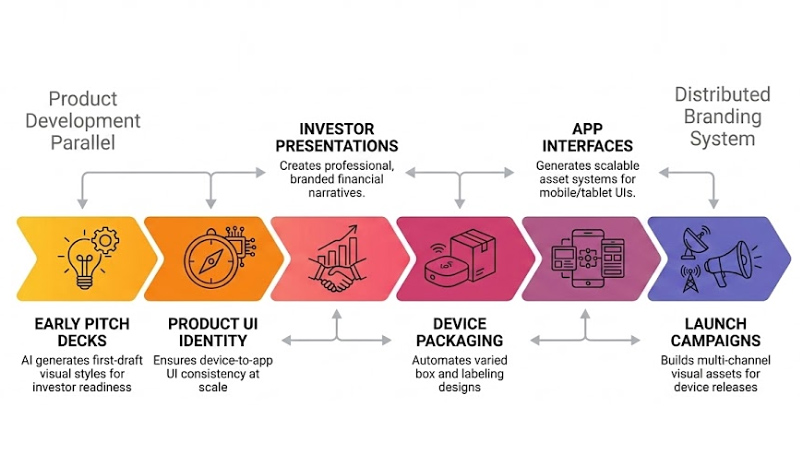
Growing IoT teams don’t treat branding as a separate step anymore. It moves alongside product development. As devices, apps, and systems take shape, the brand identity evolves with them. AI tools now sit inside that process and speed up how decisions get made. Common use cases include:
- Early-stage pitch deck creation
- Product UI identity alignment
- Investor presentations
- Device packaging and labeling
- App interface visuals
- Marketing campaigns for new hardware releases
As teams grow, branding work becomes more distributed. Designers, engineers, and marketers all touch identity system in some form. AI helps keep things aligned without slowing down progress. It gives teams a shared starting point that can be refined instead of rebuilt.
How AI Branding Impacts IoT Product Launch Speed
Scaling an IoT startup requires a continuous stream of fresh content. New firmware updates, feature releases, security patches, and the campaign pushes all require fresh visuals. When design work depends on slow handoffs or external teams, everything starts to pile up.
AI branding tools remove that delay. Marketing teams can generate launch assets in minutes instead of waiting days. A simple update text can turn into a full set of branded visuals without restarting the design process each time.
Most platforms also support editable outputs. That means teams can refine designs instead of rebuilding them. Small changes no longer break the workflow, which keeps launch cycles aligned with product updates.
The following table shows how AI branding tools compare to traditional approaches across the tasks IoT startups face most often:
| Task | Traditional Agency | AI Branding Tool |
| Logo concepts | 2 to 3 weeks | Under 2 minutes |
| Brand guidelines | 4 to 6 weeks | Same session |
| Product mockups | 1 to 2 weeks | Minutes |
| Social media assets | Ongoing retainer | On demand |
| Revision cycles | Days per round | Instant |
| Total cost (initial) | $8,000 to $40,000+ | $60 to $250/year |
When teams prepare for CES, investor pitches, or crowdfunding launches, this speed difference decides how polished the brand looks at the moment it matters most.
What to Lock In Before You Scale
If you’re an IoT startup getting ready to move fast, set these up before you hit growth stage:
- A primary logo with at least three size variations
- A secondary color palette with specific hex codes
- Two to three approved typefaces with usage rules
- A photography style guide for product and lifestyle imagery
- A set of approved social media templates
These don’t need to cost a fortune or take months. With the right AI tooling, you can have a complete, professional brand identity set up in a single afternoon.
Why This Matters for 2026
In 2026, the speed of your visual identity is tied to your ability to scale. Not because design is more important than product. But because speed is the competitive advantage, and design consistency is how you move fast without looking sloppy.
IoT startups that embrace this win. They launch faster. They pivot cleaner. They build confidence with customers and investors.
The ones that don’t (that stick with placeholder logos and inconsistent materials) look like they’re still figuring it out. And in a crowded market, that hesitation kills momentum.
The Takeaway
Fast-scaling IoT startups can’t afford to ignore branding. But they can’t afford traditional branding either. AI-driven branding tools close that gap. They give founders the speed they need without the cost or timeline overhead. That kind of speed changes how startups operate. It keeps branding from becoming a bottleneck and lets teams move with the same pace as product development.
 ChatGPT