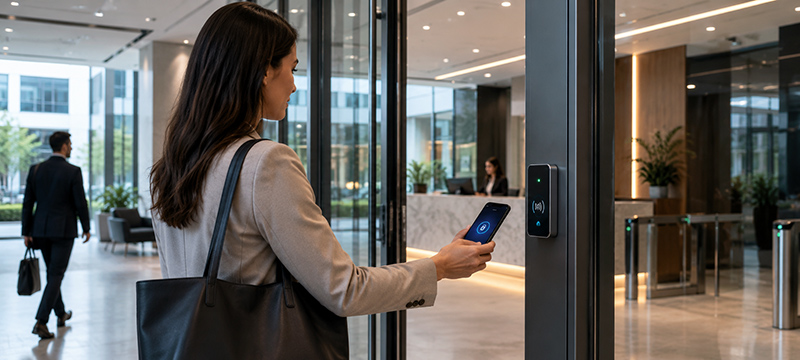
Commercial buildings have quietly become one of the most active areas for IoT adoption, and access management is leading the way. What used to mean a lock, a key and a logbook at reception has evolved into a connected layer of technology that supports safety, convenience and smarter operations across an entire building.
For facilities managers and building owners, the shift is not just about replacing hardware. It is about rethinking how people move through a space and how that data can make everyday operations easier for everyone involved, from tenants to security teams to the visitors passing through each day.
This article looks at how connected access systems work, why they matter for modern commercial buildings, and what to consider when planning an upgrade.
What Makes Access “Connected”
A connected access system links doors, credentials and monitoring software into a single network, rather than treating each entry point as an isolated piece of hardware. This means a building can respond to real-time information instead of relying on manual checks or end-of-day reports.
In practice, this might mean a mobile credential replacing a physical key card, or a dashboard that shows building managers which areas are in use at any given moment. The connection between devices is what turns a simple door into a useful source of operational insight.
Everyday Benefits for People in the Building
The most visible benefit of connected access is convenience. Staff and visitors can move through a building using a phone or a badge, without fumbling for keys or waiting for someone to buzz them in. For larger office complexes or mixed-use developments, this smooths out the daily experience for everyone who passes through.
There is also a genuine safety benefit. Connected systems can automatically lock down specific zones during an emergency, alert security teams to unusual activity, and give staff peace of mind that entry points are being monitored consistently, not just checked occasionally by a guard doing rounds.
Supporting Smarter Building Operations
Beyond the entrance, connected access data feeds into broader building management decisions. Occupancy patterns drawn from access logs can inform cleaning schedules, energy use, and even how a building’s layout is used over time. For anyone comparing options, resources on door access control explain the practical differences between systems and what tends to matter most for commercial settings.
This kind of operational visibility helps facilities teams work proactively rather than reactively. Instead of waiting for a complaint about an overcrowded meeting room or an under-used floor, managers can see the pattern forming and adjust well ahead of time.
Choosing the Right System for a Commercial Building
Not every commercial building needs the same level of connected access. A single-tenant office has very different requirements from a multi-tenant building with shared amenities, and the right system should reflect that. Modern commercial security systems combine access control, video surveillance, visitor management, and real-time monitoring to provide a more unified approach to building security.
Key questions worth asking include how the system integrates with existing security infrastructure, how credentials are issued and revoked, and how the system performs during a network outage. IoT Business News regularly covers building technology trends that help put these decisions into a wider industry context.
Getting the Rollout Right
A successful rollout usually starts with a pilot in one section of a building before expanding further. This allows facilities teams to fine-tune settings, train staff, and gather feedback from the people who use the system every day.
Communication matters as much as the technology itself. When staff understand how the system works and how it benefits them directly, adoption tends to be smoother and any early friction is resolved quickly, rather than turning into a source of complaints down the line.
The Bigger Picture for Smart Buildings
Connected access is rarely deployed on its own. It usually sits alongside other smart building systems, from lighting to climate control, all sharing data to make a building run more efficiently. According to McKinsey, commercial buildings that integrate connected technologies across multiple systems see measurable gains in both efficiency and occupant satisfaction.
As commercial buildings continue to modernise, access is increasingly seen as a foundation rather than an afterthought. It is the layer that most directly touches the people using the building every day, which makes getting it right particularly valuable.
Conclusion
Connected access systems are reshaping commercial buildings by making entry smarter, safer and more convenient for everyone who uses them. Rather than being about restricting movement, the technology is fundamentally about supporting people, from staff and visitors to the wider community the building serves.
For building owners weighing an upgrade, the priority should be a system that fits the building’s specific needs, integrates well with existing infrastructure, and genuinely improves daily life for the people who walk through its doors.
 ChatGPT