

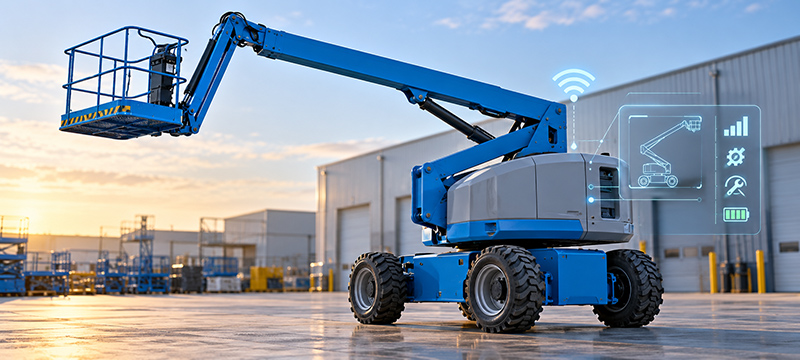
If you rely on aerial lifts, you already know downtime hits hard. A machine that sits still can stall a construction crew, delay warehouse work, or disrupt a maintenance schedule. Good parts planning remains essential, but connected fleet monitoring can make it more effective. By combining equipment data, maintenance records, and accurate component identification, operators can identify emerging problems earlier and keep lifts ready for the next job.
Identifying the correct component using equipment records
Ordering the right part starts with better machine identification. Model number alone usually isn’t enough. You’ll want the serial number, equipment year if available, and details about the failed component.
Photos help more than many teams realize. A picture of the worn part, its label, connector type, mounting position, and surrounding assembly can save a lot of back-and-forth.
You should also check:
- Operator and service manuals
- Existing maintenance records
- Previous invoices for the same machine
- Manufacturer diagrams and exploded views
When you need to cross-check fitment, a Genie parts catalog can help you match components to the correct lift model and assembly. That cuts down on ordering errors and wasted downtime.
Precise identification matters most with electrical and hydraulic parts, where a small mismatch can turn a quick repair into a longer, messier troubleshooting session.
For fleets equipped with telematics, an asset identifier and a recent diagnostic record can also help a technician confirm which unit needs attention. However, fault codes alone do not establish the correct replacement part; the machine’s serial number and manufacturer documentation remain the primary references.
Why connected maintenance and parts planning matter
Aerial lift maintenance often looks straightforward on paper. In practice, one wrong part number or delayed shipment can derail an entire week. On connected machines, telematics can add operating-hour readings, fault codes, battery status, and other diagnostic information to the maintenance picture, depending on the equipment and available sensors.
You’re not just maintaining a machine. You’re protecting jobsite timelines, technician labor, rental costs, and safety compliance. A lift with a worn switch, leaking hydraulic component, or damaged control part can become a very expensive paperweight.
Planned parts management also helps you avoid panic buying. Rush orders usually cost more, and mistakes happen when people order under pressure. That’s when teams end up with components that almost fit, which is mechanical heartbreak with a price tag.
Treating parts planning as part of fleet operations, rather than an afterthought, supports better uptime and more predictable maintenance spending. Connected data can help maintenance teams prioritize which machines need attention, but it does not replace inspections or manufacturer service procedures.
What recurring component failures can reveal
Not every component wears out at the same pace. Repeated issues with batteries, controls, or hydraulic systems may reveal maintenance needs before a machine is taken out of service.
Common replacement items on aerial lifts include:
- Batteries and chargers
- Tires and wheels
- Hydraulic hoses and fittings
- Control boxes and switches
- Sensors and limit switches
- Joysticks and platform controls
- Filters, seals, and basic service items
When these parts fail repeatedly, they often point to a larger issue. Dead batteries may suggest poor charging habits. Damaged tires can reveal rough terrain use beyond the machine’s sweet spot. Frequent control issues might mean exposure to moisture, dust, or impact.
If you track repeat failures by machine model and job type, patterns become obvious. That gives you a better maintenance strategy than simply replacing the same component every few months and hoping the equipment suddenly develops better manners.
Where sensors or a telematics unit are available, teams may be able to review trends in battery voltage, engine hours, charging events, or machine fault reports. These signals can guide troubleshooting and preventive maintenance, although the measurements available vary by lift model and retrofit system. Not every fault can be predicted from connected data.
Connecting parts inventory with maintenance data
You do not need an elaborate IoT platform to manage lift parts well. You need consistent records and a way to turn relevant equipment information into maintenance actions.
Start with a basic list of machines in your fleet. For each unit, note the model, serial number, service intervals, and parts that commonly get replaced. Then create a small stocking list for items with predictable wear.
Your inventory system should track:
- Part number
- Description
- Machine compatibility
- Quantity on hand
- Reorder threshold
- Supplier and lead time
- Last purchase date
A spreadsheet works for smaller teams. For larger or mixed fleets, a computerized maintenance management system (CMMS) can link asset records, work orders, and parts inventory. Where supported, integrations with telematics platforms can use operating hours or diagnostic alerts to trigger a maintenance review. The important part is keeping records current and verifying alerts before replacing components.
Store parts in a labeled, clean, dry area. Tossing hydraulic seals into random bins with mystery bolts is not inventory management. It’s a scavenger hunt no technician asked for.
Good organization shortens repair time and helps you reorder before a critical item disappears.
For connected fleets, the next step is to establish a clear workflow: review an equipment alert, verify the issue through inspection, create a work order, and check whether the required replacement part is in stock. Automating the recordkeeping can reduce administrative delays without automating safety-critical repair decisions.
Choosing between OEM, aftermarket, and rebuilt options
Parts sourcing is rarely one-size-fits-all. Your best choice depends on the component, the age of the machine, budget pressure, and how critical the part is to safe operation.
OEM parts are often the safest bet for fit, performance, and warranty alignment. They’re especially useful for controls, sensors, and model-specific assemblies.
Aftermarket parts can work well for certain wear items if they come from a reputable supplier and meet the required specifications. Rebuilt components may make financial sense for older machines, particularly when new assemblies are costly or hard to source.
Before you buy, ask practical questions:
- Is the part safety-critical?
- Does the supplier confirm compatibility?
- What is the warranty?
- How fast can replacements ship?
- Will installation require calibration or extra labor?
Saving money on a part that fails early or fits poorly usually costs more in technician time and lost uptime.
Working with suppliers to reduce delays and mistakes
A good supplier relationship can make maintenance much smoother. A weak one can leave you chasing tracking numbers while your lift stays out of service.
Look for suppliers that provide clear product descriptions, diagrams, responsive support, and realistic shipping expectations. If they understand aerial equipment, they can often help verify fitment before you place an order.
It helps to standardize how your team submits parts requests. Include machine details, symptoms, photos, and urgency level. That gives the supplier enough context to recommend the correct component quickly.
You should also review supplier performance over time. Track fill rates, shipping speed, return handling, and accuracy. The cheapest source is not always the best source if every third order creates another round of troubleshooting.
For businesses with multiple lifts, consistent sourcing can simplify purchasing, reduce errors, and make recurring maintenance less chaotic.
Sharing accurate asset and component data between maintenance teams and suppliers can be particularly useful for mixed fleets. Part compatibility should still be verified against approved documentation rather than inferred solely from telematics data.
Combining preventive maintenance with IoT monitoring
The strongest parts strategy still depends on routine inspection. Connected monitoring can complement scheduled servicing by surfacing changes in operating conditions or fault histories between technician visits.
Set up daily operator checks, scheduled preventive maintenance, and clear reporting for anything unusual. Small symptoms matter. A sticky control, slow lift response, uneven tire wear, or minor hydraulic seepage can point to a part nearing failure.
Your routine should include:
- Pre-shift visual inspections
- Battery charging and terminal checks
- Hydraulic fluid and hose inspection
- Tire and wheel condition review
- Function tests for controls and safety systems
- Scheduled replacement of service items
If a lift provides remote diagnostics, assign someone to review alerts and document the follow-up action. Manage access to fleet platforms securely, keep connected devices updated according to vendor guidance, and avoid exposing equipment controls unnecessarily to external networks.
Train operators to report changes early instead of waiting until a machine becomes unusable. Telematics alerts should support—not override—their observations, especially when a safety-related fault or unusual movement is involved.
For aerial lift fleets, the most practical IoT strategy is not simply collecting more data. It is connecting useful machine signals with inspections, maintenance histories, and accurate parts sourcing. That combination can shorten diagnosis and support better-informed maintenance decisions while keeping safety procedures at the center.
 ChatGPT