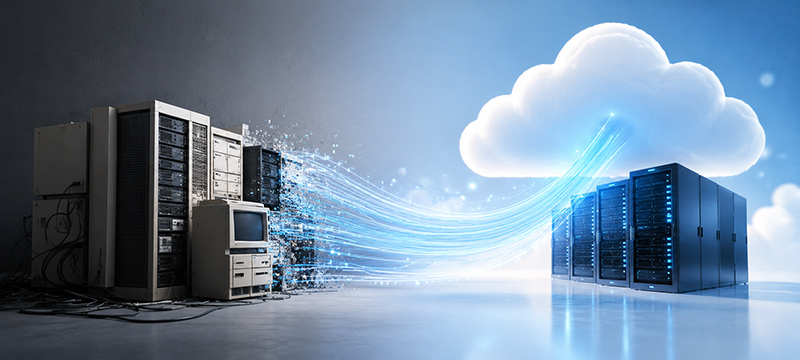
Many legacy applications are still essential for businesses today. The problem is not that these systems cease to function, the issue is that they are getting harder to adapt. When the applications are critical, and were invented decades ago, integrating cloud services, connecting IoT devices, supporting real-time analytics or introducing AI capabilities can be much more complex.
For a lot of organisations, technology is not the only motivator for modernization. It’s typically a business decision made to increase agility, lower maintenance expenses, enhance security, and build an IT environment that can adapt to future growth. Many companies have a phased strategy that involves cloud migration and application modernization, rather than a complete replacement, which means that critical applications continue to run while new applications and capabilities are added over time.
The role of the right technology partner is significant to that process. Background in enterprise environments, cloud, integration and business-critical applications can make a big difference in the success of a modernization effort.
Key Elements of a Successful Legacy Modernization Project
Technology alone rarely determines whether a modernization initiative succeeds. Organizations that see the strongest results usually start with clear business priorities, a realistic roadmap, and an approach that minimizes disruption throughout the transition. While every project has its own requirements, these elements are common across many successful modernization programs.
- Business-first planning – Define measurable objectives before making technology decisions. Modernization should support outcomes such as improving operational efficiency, reducing costs, accelerating product delivery, or enabling new digital services.
- A clear cloud strategy – Public, private, and hybrid cloud environments each offer different advantages. Choosing the right model depends on application requirements, security and compliance needs, and long-term business plans.
- Integration with existing systems – Legacy applications often support multiple business functions and exchange data across the organization. Planning integrations early helps maintain business continuity while connecting legacy environments with modern cloud platforms and enterprise applications.
- Phased implementation – Modernizing systems incrementally reduces project risk, limits operational disruption, and allows organizations to evaluate progress before moving to the next stage.
Leading Legacy Modernization Companies at a Glance
| Company | Core Expertise | Best For |
| DXC Technology | Legacy modernization, cloud migration, application transformation | Large enterprises modernizing mission-critical systems |
| IBM Consulting | Hybrid cloud, mainframe modernization | Complex enterprise IT environments |
| Accenture | Enterprise modernization, cloud transformation | Global digital transformation programs |
| Capgemini | Application modernization, cloud engineering | Manufacturing and industrial organizations |
| Cognizant | Legacy modernization, cloud-native applications | Enterprise application transformation |
| Infosys | Cloud migration, application modernization | Large-scale modernization initiatives |
Best Companies for Legacy System Modernization and Cloud Migration
DXC Technology
Transitioning legacy systems to modern should require more than simply cloud migration. Organizations must also re-evaluate their current systems for how they facilitate business processes, connect with new technologies and respond to evolving operational needs. DXC Technology takes a broader approach to modernization, and includes application transformation, cloud migration and enterprise modernization services.
The company collaborates with organizations to modernize legacy applications, move workloads to public cloud, private cloud, and hybrid cloud spaces, and to streamline complex IT environments. It also offers application assessment, cloud-native transformation, platform modernization, integration and application management services. DXC is not an all-or-nothing proposition, and can be applied in a phased manner that minimizes operational risks and ensures the continued availability of key business applications during the transition. It has enabled the company to serve as a technology partner for long term for enterprises across sectors like manufacturing, financial services, healthcare, insurance, and public sector.
Learn more about DXC’s application modernization services: https://dxc.com/solutions/application-services/applications-modernization
IBM Consulting
IBM Consulting has deep expertise in assisting enterprises to modernize complex legacy environments, including those that are driven by business-critical applications and mainframes. Its modernization services cover areas such as modernization of hybrid cloud, application modernization, modernization of AI and cloud infrastructure. It also provides companies with assistance when they are interested in maximizing the utility of their existing infrastructure without completely replacing it, while working toward their long-term technology objectives with business continuity in mind. IBM often gets involved in modernization projects where there are no disruptions of crucial operations.
Accenture
Accenture collaborates with companies on mass transformation initiatives, where modernization of legacy systems and transition to cloud and digital innovation are all part of the program. It offers application modernization, cloud strategy, enterprise architecture, enterprise systems integration, and technology transformation services. The company empowers businesses to be cloud-native and helps to simplify application portfolios and optimize operations. Multinational organisations that are implementing business unit and region modernisation are routinely using Accenture’s global delivery to implement their projects.
Capgemini
Capgemini offers legacy modernization services, which cover application transformation, cloud engineering and systems integration. It has a team of experts that support organizations seeking to modernize enterprise-critical apps, move workloads, and enhance the interoperability between on-premises and cloud environments. The company has worked in a variety of sectors, such as manufacturing, automotive, energy, telecom, and public sector, where modernization projects are frequently operational technology (OT) and enterprise IT projects. It provides consulting and engineering services to upgrade the existing platforms and to assist organizations to carry out future digital initiatives.
Cognizant
Cognizant supports customers in modernizing legacy applications and preparing them to become cloud-native, digital-first applications. The modernization services offered by it include application assessment, migration planning, cloud adoption, software engineering, and platform modernization. A lot of projects aim to cut down on technical debt, enhance app performance and build architectures that will be more maintainable over time. Cognizant operates in healthcare, banking, life sciences, retail, and manufacturing and can help with both the incremental modernization and full transformation programs.
Infosys
Infosys offers app modernization and cloud migration services for enterprises undergoing enterprise modernization initiatives. It can guide customers through the assessment of legacy applications, modernizing architectures, migrating workloads and embracing cloud technologies that enhance flexibility and scalability. As part of its transformation initiatives, the company also provides assistance in automation, data modernization and application management. Infosys has a diverse client base in financial services, manufacturing, telecommunications, retail and energy and has been serving enterprises that want to modernize tech without compromising business continuity.
What to Consider Before Starting a Modernization Project
Organizations must think beyond technology before embarking on a modernization program. Early review of these areas can help mitigate the project risk and help establish a clearer course of action.
- Application Portfolio — Identify systems for modernization, retention, replacement or retirement based on business value and systems technical condition.
- Migration Approach — Determine if rehosting, replatforming, refactoring, or replacement of applications are the best approaches to take instead of doing the same for the entire environment.
- Integration Requirements — Think about how modernized applications will communicate with the legacy business applications, the cloud, and connected platforms.
- Long-Term Operations — Plan for maintenance, monitoring, governance, and future enhancements that should be sustained for the long-term to maximize value from modernization.
FAQ
What is Legacy System Modernization?
Legacy system modernization involves upgrading legacy systems to enhance their performance, security, scalability, and compatibility with current technologies.
What advantages does cloud migration offer legacy modernization?
By moving data and applications from on-premises infrastructure to the cloud, Cloud migration will help organizations benefit from greater scalability, cost savings on infrastructure, and a more flexible platform for modern applications and digital services.
Do we have to move ALL legacy applications to the cloud?
No, the best method will be determined by the business value, technical needs and integration to other systems of the application in question.
What sectors are most likely to be impacted by legacy modernization?
Legacy modernization is proven in many industries, such as manufacturing, financial services, healthcare, insurance, retail, and telecommunications and public sector, where long-running business-critical systems are prevalent.
 ChatGPT