

Quectel is bringing Android 16 to its 4G and 5G smart module portfolio, giving IoT device makers access to a more recent software platform alongside cellular connectivity and embedded processing.
For manufacturers of increasingly sophisticated IoT devices, the operating system has become an important part of product design and lifecycle planning. This is particularly true for smart modules, which combine cellular connectivity, application processing and software within a single embedded platform.
Quectel’s latest move extends Android 16 support across several smart modules targeting 4G and 5G applications. The company’s portfolio includes, among others, the LTE Cat 4 SH602FA and 5G SE505FE, both offered with Android 16, while the 5G SG520B supports multiple Android generations including Android 16.
More than a connectivity component
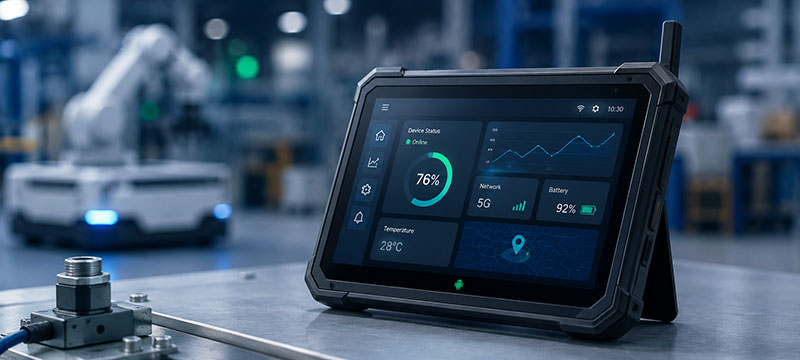
The announcement illustrates how the role of cellular modules is evolving. In devices such as industrial handhelds, payment terminals, smart displays and other multimedia-rich equipment, a smart module can effectively provide both the communications layer and the main computing environment.
That can simplify product architectures compared with designs using a separate application processor and cellular modem. Quectel itself describes smart modules as integrated computing, control and communications platforms, with interfaces capable of supporting cameras, displays, sensors and other peripherals.
But this integration also means that selecting a module is no longer primarily about radio bands, data rates and certifications. OEMs must consider application compatibility, peripheral support, security updates and the lifecycle of the operating system itself.
Android lifecycle becomes an IoT consideration
For device makers already using Android-based platforms, moving to Android 16 may provide a more current foundation for new product designs. It can also require additional validation, particularly where applications, peripherals or device-management systems were developed around earlier Android releases.
This matters because industrial and enterprise IoT products typically have much longer lifecycles than smartphones. An operating system upgrade can therefore affect development and certification schedules even when the underlying cellular technology changes little.
The broader trend is clear: cellular module vendors are increasingly competing on the completeness of their hardware and software platforms, not simply on connectivity. As IoT devices incorporate richer interfaces, multimedia capabilities and more local processing, the boundary between a cellular module and an embedded computing platform continues to blur.
For OEMs considering Quectel’s Android 16 modules, the key issue will ultimately be less about having the latest Android release and more about how that software platform fits into the security, maintenance and support requirements of devices expected to remain deployed for years.
 ChatGPT