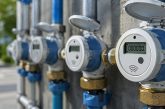
Origin Energy is working with Landis+Gyr to add IoT-based smart gas capabilities to existing metering assets in Australia, aiming to enable remote readings and more timely usage data without replacing meters.
Gas metering has often lagged electricity in the move to connected infrastructure, partly because gas meters are widely distributed, battery-dependent and typically harder to justify for full hardware replacement. That makes retrofit approaches particularly important: they can digitise field assets while avoiding the cost and disruption of a conventional meter swap programme.
Against that backdrop, Origin Energy and Landis+Gyr are moving ahead with a smart gas deployment across Origin’s gas network in Australia. Landis+Gyr will deploy intelligent IoT modules, communications technology and a data management platform across Origin’s existing metering assets over an 18-month period. The project covers households and businesses served by Origin’s gas network and is described by the companies as one of Australia’s first large-scale efforts to digitise gas network operations across an entire customer base.
A retrofit model, not a meter replacement programme
The important detail is not simply that gas meters are being connected. It is how they are being connected. Landis+Gyr’s approach is based on adding IoT modules to existing gas meters, enabling remote meter readings and near real-time data insights while leaving the underlying metering assets in place.
That makes this announcement distinct from many smart metering projects, which are often framed around new meter rollouts or broader advanced metering infrastructure replacements. Here, the emphasis is on extending the digital life of installed assets. For a gas network, that distinction matters: reducing the need to replace physical meters can simplify customer access requirements, limit installation disruption and preserve capital already invested in field hardware.
The companies also state that the upgrade will be delivered without disruption to customers’ LPG supply. That point is operationally significant. In utility IoT, the technical value of connectivity is only part of the equation; the field process, customer scheduling and service continuity can determine whether a deployment scales smoothly.
Why the data layer matters
The immediate customer-facing outcome is straightforward: fewer manual reads and fewer estimated bills. But the larger IoT implication is the move from periodic, labour-intensive data collection toward a more automated operating model for gas usage information.
For utilities and energy retailers, remote meter readings can improve billing timeliness and data accuracy. For system integrators, the project highlights the growing role of the data management layer in utility IoT deployments. Adding modules to meters is not enough; the value depends on how reliably readings are collected, transmitted, processed and made available to operational systems.
A practical insight from this architecture is that retrofitting reduces one type of complexity while increasing the importance of another. It avoids a wholesale meter replacement programme, but it places more emphasis on compatibility with existing assets, installation procedures, communications reliability and lifecycle management of add-on IoT devices. Those are familiar issues in industrial IoT, but they become especially visible when the installed base is distributed across homes and businesses.
Relevance for the wider IoT ecosystem
Australia’s smart utility market has been more visibly associated with electricity metering than with gas. This project signals that gas networks are now being pulled further into the same digital operations model, where remote visibility and data availability become core service capabilities rather than optional enhancements.
For OEMs, the announcement reinforces demand for retrofit-ready devices that can be installed on legacy infrastructure. For connectivity providers, it points to utility use cases where coverage, power consumption and operational continuity are more important than high bandwidth. For enterprises and industrial players using gas services, more accurate and timely meter data can support better reconciliation of consumption and billing, although the announcement does not claim new energy management services beyond remote readings and data insights.
The conditional future opportunity is also notable. Landis+Gyr says a successful rollout could support broader deployment across approximately two million Landis+Gyr gas meters already installed in Australia. That is not a confirmed expansion, but it explains why the current programme will be watched beyond Origin’s network: it may provide a template for digitising existing gas metering assets without large-scale network replacement.
In practical terms, this is less a story about a single smart meter device than about a deployment model. If the programme performs as intended, it will show how utilities can modernise gas metering by layering IoT, communications and data management onto infrastructure already in the field.
 ChatGPT