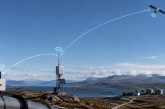
The LoRa Alliance is positioning LoRaWAN as a common connectivity layer for smart agriculture, citing deployments that span crop disease detection, livestock tracking, irrigation and estate monitoring. The announcement is notable because it frames LoRaWAN not as a single-use field sensor network, but as reusable farm infrastructure that can combine private gateways, unlicensed spectrum and satellite reach.
Farms are a difficult fit for many wireless technologies because the assets that need monitoring are often precisely where conventional infrastructure is weakest: across open fields, remote grazing land, orchards, reservoirs and storage areas with limited mains power. The connectivity problem is not only range. It is also the operational cost of maintaining devices over wide areas and the practical challenge of adding new applications without rebuilding the network each time.
Against that backdrop, the LoRa Alliance has made a broad smart agriculture case for LoRaWAN, arguing that the technology has become a preferred LPWAN option for deployments ranging from individual farms to larger programs. The organization points to long-range gateways, low-power field devices, operation in unlicensed spectrum and satellite-connected LoRaWAN as the elements that make the standard suited to agricultural environments.
Why this is more than another smart farming announcement
The differentiator here is not a new sensor or a single farm deployment. The LoRa Alliance is presenting LoRaWAN as a shared network layer that can support multiple agricultural workloads over time. A farm may begin with soil moisture monitoring, then add irrigation valves, weather stations, tank levels, livestock tracking, gate security or cold-store monitoring on the same basic network architecture.
That matters because many smart agriculture projects struggle to move beyond isolated pilots. If each application requires its own connectivity design, power model and service contract, the economics become harder to justify. LoRaWAN’s model changes the integration problem: instead of negotiating coverage for every device type, the operator can deploy gateways where needed and connect low-data-rate devices suited to agricultural monitoring.
The Alliance says the ecosystem now includes more than 650 LoRaWAN Certified devices from more than 334 member companies, and that more than 125 million devices were connected via LoRaWAN worldwide at the end of 2025. Those figures are relevant for buyers because farm deployments often involve heterogeneous assets, not a single class of endpoint. Device choice and interoperability become practical procurement issues, especially when growers want to expand from one use case to several.
Use cases show different network constraints
The examples cited by the Alliance underline how varied agricultural IoT requirements can be.
In Ghana and Brazil, the Banalytics project, supported by Lacuna Space, uses satellite-connected LoRaWAN sensors to help detect Black Sigatoka in banana crops before symptoms spread. The deployment combines environmental sensing, soil-nutrient measurement and AI imaging, with data from one monitored hectare extending across a wider growing area.
In Australia, MooField uses lightweight solar-powered GPS ear tags weighing under 30 grams for cattle across wide grazing land. The deployment is built on RAKwireless LoRaWAN gateways with solar batteries and remote management, and the team is exploring satellite backhaul for larger roaming areas. Here, the critical issue is not dense sensor coverage but maintaining visibility of moving assets where neither power nor conventional network access can be assumed.
In Malaysia, MIE Agro Farm deployed more than 20 LoRaWAN soil sensors from Seeed Studio across 6,000 durian trees on an estate of more than 80 hectares. The system replaced manual checks that previously took two hours a day and created a data benchmark for durian cultivation.
In Bulgaria, Loren Networks deployed TELTELIC KIWI agriculture sensors for a producer of watermelons and cabbages to monitor soil moisture, temperature, humidity and light from a single platform.
A practical insight from these examples is that LoRaWAN’s role varies by deployment. In some cases it is the access network for static sensors; in others it is the local field network feeding satellite or remote backhaul; in livestock tracking it supports mobile endpoints across a property. This separation between local device connectivity and upstream backhaul is one reason the technology is relevant in agriculture, where coverage gaps are not uniform and infrastructure decisions are highly site-specific.
Implications for the IoT ecosystem
For OEMs, the message is that agricultural devices need to be designed around long operating life, low data volumes and outdoor deployment rather than broadband assumptions. For connectivity providers, LoRaWAN creates an opportunity to offer managed rural coverage and satellite-backed extensions without tying every endpoint to a SIM-based model. System integrators, meanwhile, must focus less on a single dashboard and more on gateway placement, power, device onboarding and the sequencing of applications over time.
For growers and industrial agriculture operators, the near-term value is pragmatic: fewer manual checks, better field-level data, and the ability to extend monitoring into places where cellular, Wi-Fi or Bluetooth may be impractical. The larger point is that smart agriculture is becoming an infrastructure question, not just an application question. LoRaWAN’s claim is strongest where farms need many small, distributed signals collected reliably over large areas, with room to add new use cases once the first network is in place.
 ChatGPT